
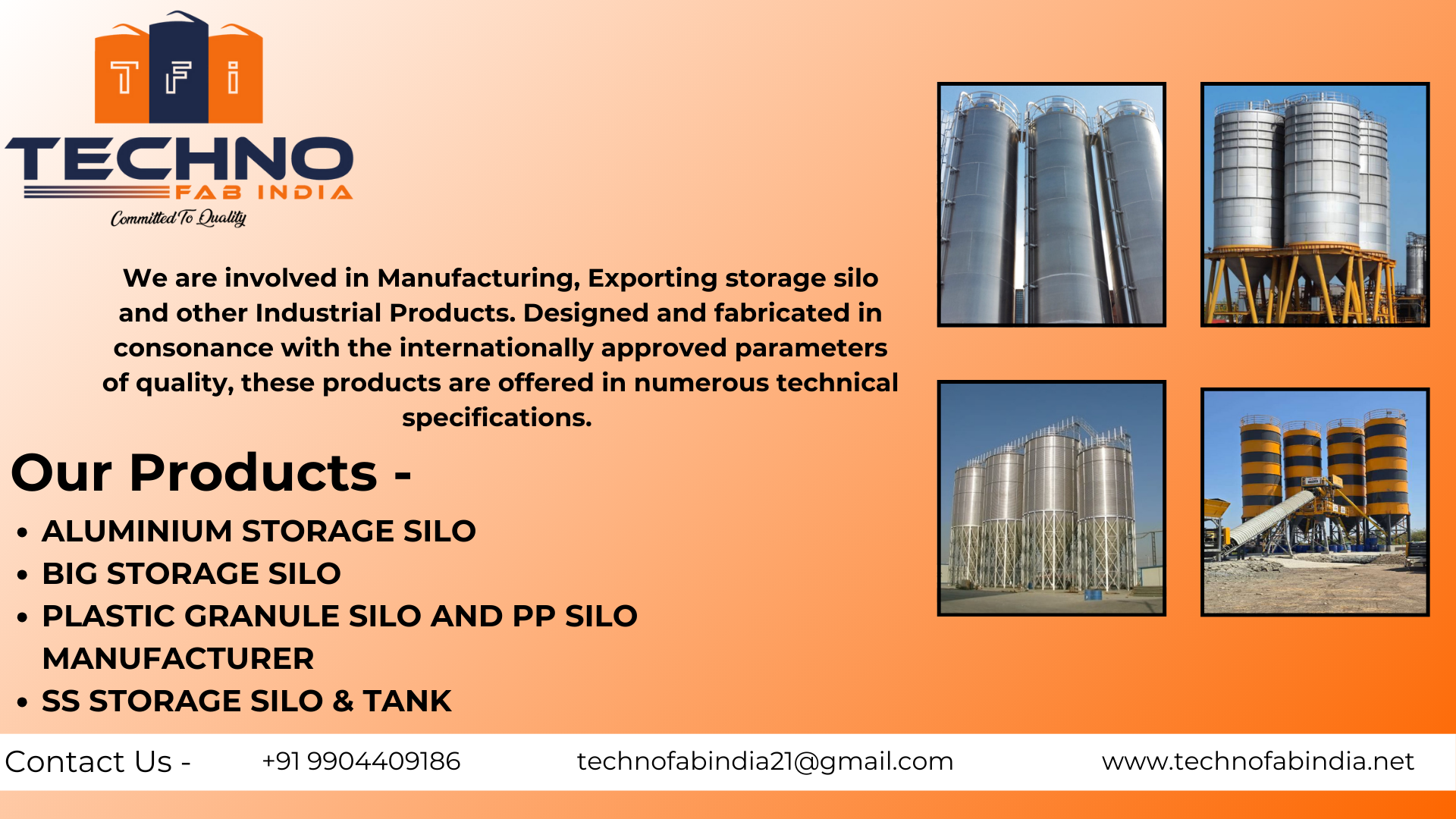
Cement Silo with Pneumatic Conveying System Manufacturer Gujarat
Introduction — Clean Bulk Cement Storage and Transfer in One Integrated Setup
A cement silo with pneumatic conveying system is a complete bulk material handling solution that stores cement safely and delivers it automatically to the point of use. Technofab India manufactures silo systems in Gujarat that combine robust storage fabrication with reliable pneumatic transfer design for batching plants, RCC product lines, dry mortar units, and other cement-consuming industries. The result is controlled cement movement, reduced spillage, dust-managed operation, and consistent feeding to mixers or weigh hoppers. For engineered silo systems and dependable integration, connect with Technofab India.
How a Pneumatic Cement Conveying System Works with a Storage Silo
In a typical setup, cement is unloaded from a tanker using compressed air and conveyed through a pipeline into the cement silo. Inside the silo, dust collection and pressure control protect the environment and the silo structure. During discharge, aeration pads and fluidization at the cone prevent bridging and ensure smooth material flow. Cement then moves through rotary valves, screw feeders, or pneumatic discharge lines to a weigh hopper, day bin, or mixer. This integrated approach creates a stable, predictable cement feeding system for batching plant operations with minimal manual intervention.
System Configurations We Manufacture and Integrate
- Bulk cement storage silo Gujarat units with integrated tanker unloading line connections and safety accessories.
- Silo with air slide system and cone aeration for consistent material discharge and flow stability.
- Pneumatic conveying pipeline for cement with bends, couplings, and wear-safe routing for long service life.
- Dust collection cement silo arrangements including bag filter housings and pressure relief safety components.
- Cement transfer integration to weigh hopper, day silo, mixer feeding points, and closed-loop material routing.
Critical Features for Stable Pneumatic Conveying Performance
- Flow Assurance: Proper aeration pad placement and cone geometry reduce rat-holing and bridging.
- Dust Control: Correctly sized bag filters keep the environment clean during tanker filling and venting.
- Pressure Safety: Relief and vacuum protection support safe operation during high airflow transfer cycles.
- Pipeline Design: Optimal line diameter and bend selection improve conveying stability and reduce blockages.
- Maintenance Friendly: Access doors, manholes, and service points make cleaning and checks practical.
Where Cement Silo with Pneumatic Conveying System Is Used
- Concrete batching plants needing consistent cement feeding to weigh hoppers and mixers.
- RMC and infrastructure projects requiring bulk cement unloading system Gujarat for high throughput.
- Dry mortar, plaster, tile adhesive, and putty manufacturing lines with controlled powder handling.
- Precast and RCC products where clean, repeatable dosing improves product consistency.
Benefits of Integrated Storage and Pneumatic Transfer
- Cleaner operation with reduced cement spillage and improved site housekeeping.
- Consistent flow and reliable discharge supported by aeration and optimized cone design.
- Faster unloading from tankers with controlled pressure venting and dust-managed filling.
- Lower manual handling and safer working conditions around cement transfer zones.
- Better batching accuracy when feeding is stable and repeatable for each cycle.
Design Considerations That Decide Performance and Reliability
For best results, the silo and pneumatic conveying system must be engineered together. Conveying air volume, pipeline layout, cyclone or filter venting, and receiver conditions all influence stability. For discharge, the aeration system, outlet geometry, and feeder selection define whether cement flows smoothly or forms blockages. Technofab India focuses on matching system elements to capacity, layout constraints, and plant workflow to deliver reliable performance in real site conditions across Gujarat.
Maintenance Tips for Pneumatic Cement Transfer and Silo Operation
- Check bag filter condition and cleaning mechanism regularly to maintain dust collection efficiency.
- Inspect pneumatic conveying pipeline for air leaks, coupling wear, and excessive bend erosion.
- Verify aeration pad performance and ensure compressed air quality is dry and clean for stable fluidization.
- Keep pressure relief and vacuum protection devices functional and free from cement buildup.
- Maintain feeders and discharge components to prevent sudden flow variations and production interruptions.
FAQs – Cement Silo with Pneumatic Conveying System
Contact Details
Talk to our specialists today for tailored solutions and fast assistance.