
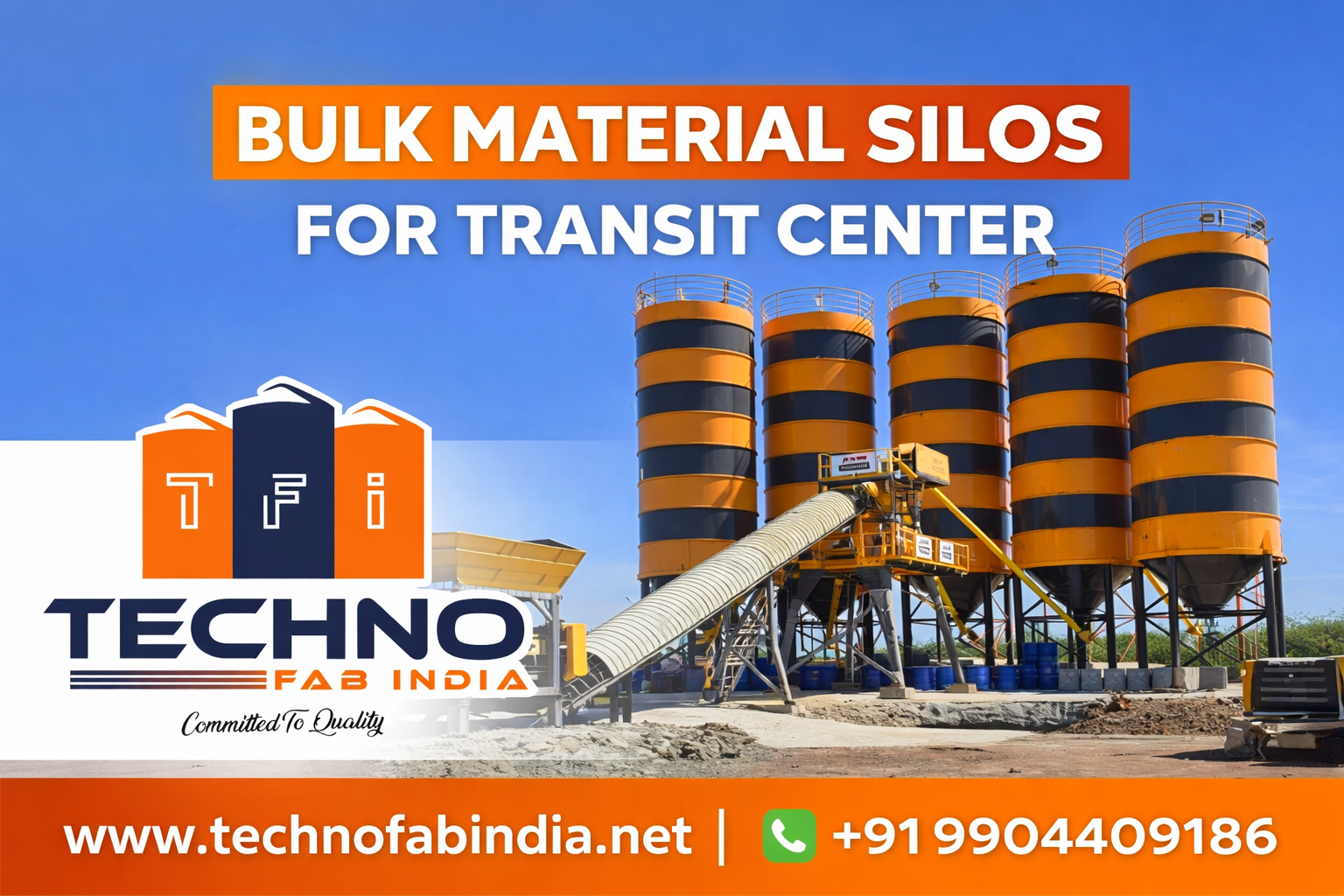
Bulk Material Silo for Transit Center Solutions by Technofab India
Introduction — Fast, Clean, and Reliable Bulk Storage at Transit Hubs
A transit center needs dependable storage that supports continuous movement of materials without delays, spillage, or dust issues. Technofab India designs a bulk material silo for transit center operations where quick unloading, controlled discharge, and safe storage are essential. These silos are widely used for cement, fly ash, sand, minerals, powders, and other bulk solids that must stay dry and free-flowing. With a practical focus on flow behavior, dust control, and structural safety, our solutions help transit hubs handle bulk materials efficiently while maintaining clean working conditions. For engineered silo systems and support, connect with Technofab India.
Why Transit Centers Need Purpose-Built Bulk Material Silos
Bulk handling at a transit center is different from fixed plant storage because it involves frequent loading cycles, variable material sources, and tight time windows. A bulk material silo for transit center use must be designed for consistent material flow, reduced segregation, and dependable discharge across changing ambient conditions. We consider particle size, moisture sensitivity, bulk density, and angle of repose to engineer hoppers, outlets, and discharge accessories that reduce bridging and rat-holing. The result is stable storage, faster dispatch, and a cleaner site with fewer interruptions in daily operations.
Common Silo Configurations for Transit Center Operations
- Stationary bulk storage silos for daily cement, fly ash, and powder handling at transit locations.
- Modular silo assemblies designed for quick installation and future capacity expansion.
- Dual-compartment silos for handling two different materials with independent discharge control.
- Transit-friendly discharge hopper designs optimized for consistent flow and reduced downtime.
- Integrated loading and transfer points for seamless feeding to conveyors, trucks, or batching systems.
Key Performance Features for Transit Center Bulk Material Storage
- Flow-First Design: Hopper geometry engineered to reduce bridging and maintain steady discharge.
- Dust Control Ready: Compatibility with dust collectors, vent filters, and sealed transfer points.
- Accurate Monitoring: Provisions for level indicators, load cells, and safe inspection access.
- Safe Operations: Proper access ladders, platforms, and guarding for maintenance activities.
- Weather Protection: Sealed manholes and suitable cladding options for moisture-sensitive powders.
Where Bulk Material Silos Are Used in Transit Centers
- Cement and fly ash transit storage for feeding batching plants, packing stations, or bulk dispatch.
- Sand and mineral storage used for blending, screening, and controlled truck loading.
- Powder handling hubs that transfer material to bagging lines, tankers, or conveyor networks.
- Multi-material transit yards where storage must support frequent changeovers and high throughput.
Benefits of Installing a Bulk Material Silo at a Transit Center
- Higher Throughput: Faster unloading and discharge control helps reduce truck turnaround time.
- Cleaner Site: Better containment and dust management improves housekeeping and safety.
- Material Protection: Proper sealing reduces moisture entry and product quality variation.
- Operational Reliability: Flow-focused hopper design reduces blockages and manual intervention.
Design Considerations for Reliable Transit Center Silo Performance
Designing a bulk material silo for transit center use starts with understanding the material and the handling sequence. We evaluate required storage capacity, cycle frequency, discharge rate, and truck movement patterns to plan the best silo position and discharge layout. Structural design includes wind loads, seismic considerations, and safe access features for operators. The discharge section can be configured to suit rotary feeders, screw conveyors, air slides, or pneumatic conveying systems based on the material type. This approach ensures the silo integrates smoothly into transit center workflows while remaining safe and easy to maintain.
Maintenance Tips for Bulk Material Silos in Transit Applications
- Inspect vent filters and dust collection connections regularly to keep emissions under control.
- Check hopper discharge gates and liners for wear, especially under high-cycle loading patterns.
- Verify level sensors and safety interlocks to reduce overflow risk and improve inventory accuracy.
- Keep inspection covers sealed and maintain weather protection for moisture-sensitive materials.
- Schedule periodic structural checks for platforms, ladders, and fasteners in high-traffic yards.
FAQs – Bulk Material Silo for Transit Center
Contact Details
Talk to our specialists today for tailored solutions and fast assistance.