
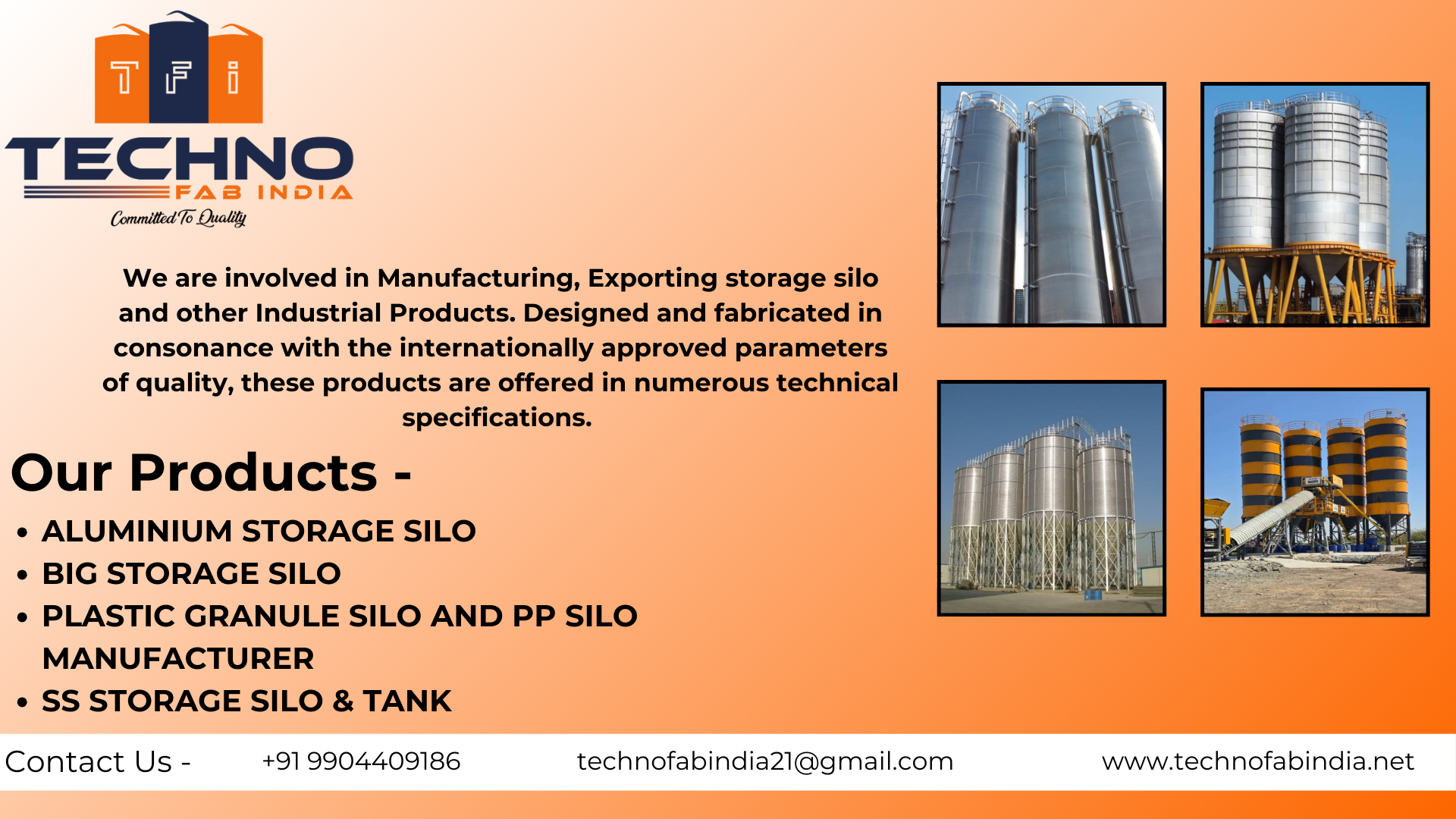
Raw Material Silo for Cement Manufacturing by Technofab India
Introduction — Bulk Storage Silos for Cement Plant Raw Materials
A raw material silo for cement manufacturing is a critical storage system that keeps powders and additives protected, free-flowing, and ready for continuous feeding into grinding and blending lines. Technofab India designs and fabricates cement plant storage silos for materials such as limestone powder, fly ash, gypsum, clinker additives, and mineral components used in cement production. With engineered discharge geometry, controlled aeration, and compatible conveying interfaces, our silo solutions help maintain stable material flow and reduce stoppages. For dependable cement plant silo fabrication support, connect with Technofab India.
Why Silo Engineering Matters in Cement Manufacturing
In cement plants, inconsistent feeding, arching, or ratholing can disrupt production and impact blend quality. A properly engineered raw material silo for cement manufacturing focuses on mass-flow friendly hopper angles, reliable outlet sizing, and the right flow aid arrangement to handle varied bulk density and moisture conditions. We integrate dust control provisions, safe inspection access, and robust structural design to support stable storage and controlled discharge. Whether the requirement is a fly ash storage silo for cement plant operations or a dedicated gypsum silo for cement manufacturing, our designs prioritize safety, hygiene, and consistent throughput.
Common Raw Material Silos Used in Cement Plants
- Limestone powder silo for cement industry dosing and buffering before milling or blending.
- Fly ash storage silo for cement plant feeding with provisions for pneumatic conveying and dust control.
- Gypsum silo for cement manufacturing to support set-time control and consistent additive supply.
- Clinker additive silo supplier solutions for mineral additives and performance-enhancing components.
- Bulk powder storage silo systems for multiple raw materials with segregated lines and controlled discharge.
Key Features for Reliable Cement Raw Material Silo Performance
- Discharge Stability: Optimized cone/hopper geometry to reduce bridging and improve flow consistency.
- Flow Aids: Aeration pads, air cannons, or vibrators as required for powder behavior and moisture conditions.
- Dust Control: Flange provisions for filter units and efficient venting during filling cycles.
- Conveying Compatibility: Interfaces for screw conveyor feeding silo cement lines or pneumatic transfer points.
- Safety Access: Platforms, ladders, manholes, and inspection points designed for plant maintenance workflows.
Where Raw Material Silos Support Cement Manufacturing
- Raw material buffering before grinding to stabilize plant feed rates and reduce mill fluctuations.
- Additive storage and controlled dosing to maintain consistent cement composition.
- Intermediate holding between conveying routes for improved production line reliability.
- Dust-contained receiving and loading during tanker/bulk transfer operations for cleaner plant environments.
Benefits of Installing an Engineered Cement Raw Material Silo
- Consistent Material Flow: Reduced stoppages caused by arching, rat-holing, and inconsistent discharge.
- Better Process Control: Stable feeding improves blend accuracy and overall cement quality consistency.
- Reduced Dust Loss: Proper venting and dust control provisions support cleaner, compliant operations.
- Operational Safety: Strong structure, safe access, and controlled discharge reduce handling risks.
Complete Cement Plant Silo Fabrication and Integration Support
Technofab India supports cement plant storage silo projects from design coordination to fabrication and site execution. We consider material characteristics, throughput requirements, filling methods, and available plant layout to engineer the right silo configuration. Our team can align silo discharge with screw conveyor feeding silo cement systems or pneumatic conveying silo cement lines while keeping maintenance access simple and safe. If you are planning a cement raw material silo manufacturer partner for a new line or capacity expansion, we can help you implement a reliable bulk powder storage silo solution.
Maintenance Tips for Cement Plant Raw Material Silos
- Inspect filter and venting provisions regularly to prevent pressure build-up during filling cycles.
- Check aeration pads, air lines, and flow aid systems to ensure consistent discharge performance.
- Monitor moisture ingress risks and maintain proper sealing at hatches, manholes, and connection points.
- Verify screw conveyor and discharge interface alignment to avoid back pressure and material packing.
- Perform scheduled structural checks for platforms, ladders, and supports, especially in outdoor installations.
FAQs – Raw Material Silo for Cement Manufacturing
Contact Details
Talk to our specialists today for tailored solutions and fast assistance.