
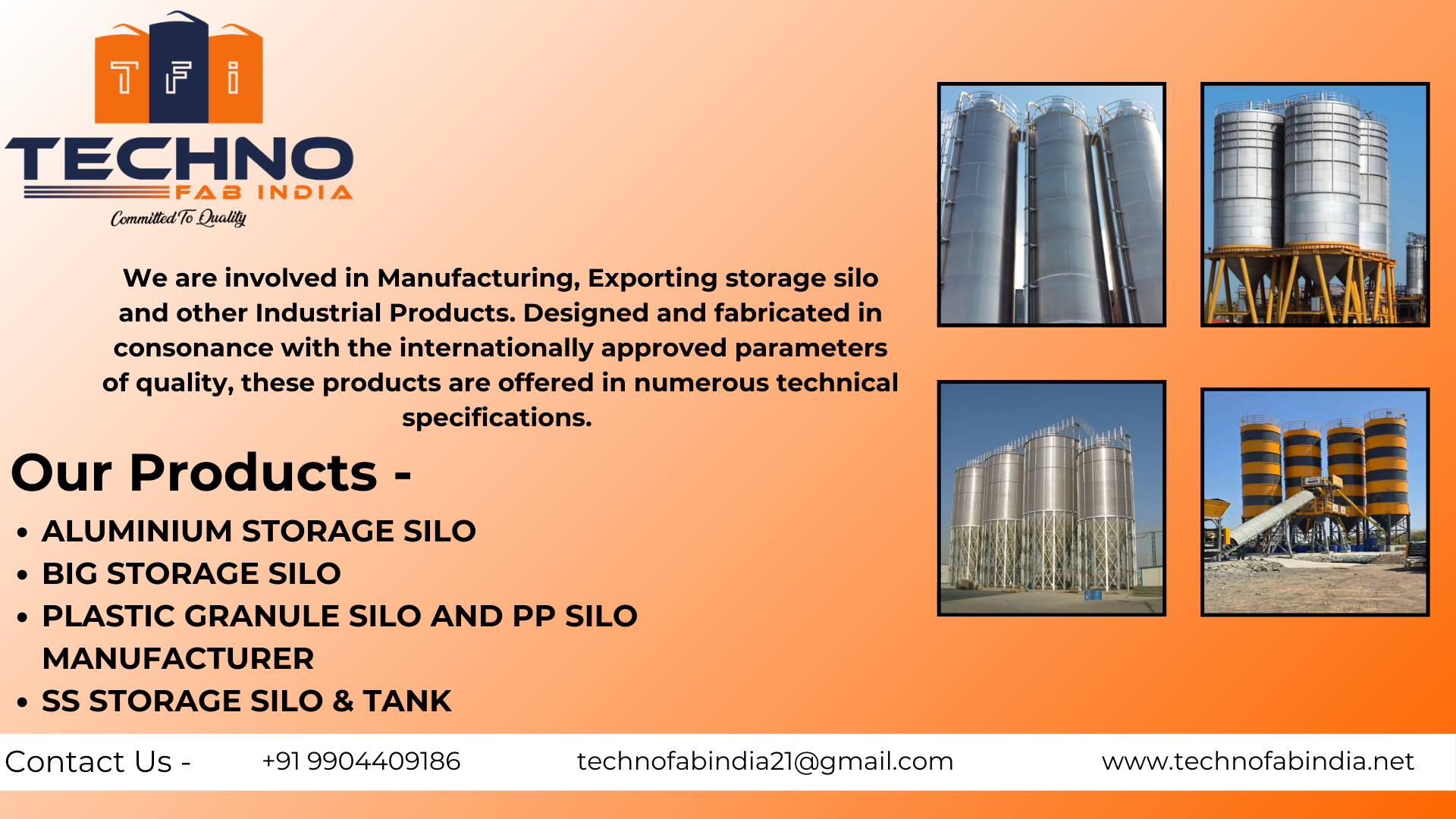
Silo for Bulk Material Handling
Introduction — Safe Storage and Controlled Discharge for Alumina Powder
An alumina silo for bulk material handling is designed to store fine, abrasive powder safely while delivering consistent, dust-controlled discharge to downstream processes. Alumina tends to compact, bridge, and generate airborne dust if the silo system is not engineered with the right hopper geometry, flow aids, venting, and sealing. Technofab India manufactures robust bulk material handling silos with practical features for smooth filling, reliable emptying, and cleaner plant operations. For project discussions and fabrication support, connect with Technofab India.
Why Alumina Needs Specialized Silo Engineering
Alumina powder handling requires attention to flow behavior, dust control, and wear protection. A well-engineered alumina storage silo supports stable material flow, reduces segregation, and protects your conveying line and feeders from surges. Design factors such as cone angle, outlet sizing, liner selection, and aeration points help prevent ratholing, bridging, and uncontrolled flush. Whether your plant uses pneumatic conveying, screw feeders, rotary valves, or loss-in-weight feeding, the alumina silo should be matched to your process, throughput, and cleanliness requirements.
Common Alumina Silo Configurations for Bulk Handling
- Vertical storage silos with mass-flow or funnel-flow hopper geometry for consistent discharge.
- Outdoor alumina silos with weather protection, access platforms, and dust-tight venting systems.
- Indoor day silos for process buffering near mixers, blenders, or packaging stations.
- Pneumatic conveying receiver silos with top inlet diffusers to reduce filter loading and dust escape.
- Hopper-bottom silos integrated with feeders, rotary airlocks, or screw conveyors for controlled dosing.
Critical Features in an Alumina Silo for Bulk Material Handling
- Flow design: Correct hopper angle, outlet sizing, and discharge transition to reduce bridging and ratholing.
- Dust control: Vent filter or bin vent connection with sealed manways and gasketed inspection covers.
- Wear protection: Abrasion-resistant liners or replaceable wear plates at high-impact zones.
- Flow aids: Aeration pads, air cannons, bin activator, or vibrator mounting provisions as needed.
- Instrumentation: Level switches, continuous level options, and pressure relief where required.
Applications of Alumina Silos in Industry
- Ceramics and refractories: Bulk alumina buffering for batching, mixing, and forming processes.
- Aluminium and metallurgy: Alumina storage for material preparation and controlled dosing systems.
- Chemical processing: Alumina used as adsorbent or catalyst support, stored in dry and clean conditions.
- Powder blending and packaging: Stable feed to blenders, bagging lines, and big-bag filling stations.
Benefits of a Properly Designed Alumina Storage System
- More consistent discharge reduces process variability and feeder surging.
- Improved dust containment supports cleaner work areas and better housekeeping.
- Reduced downtime by minimizing bridging, ratholing, and blockages.
- Lower wear on downstream equipment with controlled inlets and protected impact zones.
Design Considerations for Reliable Alumina Flow
For dependable performance, an alumina silo for bulk material handling should consider the powder's particle size distribution, moisture sensitivity, bulk density, and flow function. A correct discharge interface is equally important, including the transition to rotary valves, screw feeders, or pneumatic pick-up points. In many plants, a combination of proper hopper geometry and selective flow aids provides the best balance between reliability and operating cost. The goal is a silo that fills smoothly, stores safely, and empties predictably without manual intervention.
Maintenance Tips for Long-Term Silo Performance
- Inspect bin vent filters and connections regularly to maintain dust control and avoid pressure build-up.
- Check hopper and outlet zones for build-up, especially if humidity or temperature changes affect flow.
- Review liners and wear plates at impact points and replace them before excessive thinning occurs.
- Verify level switches and instrumentation calibration to prevent overfill and false alarms.
- Maintain air supply quality for aeration pads or air cannons using dry, filtered compressed air.
FAQs – Alumina Silo for Bulk Material Handling
Contact Details
Talk to our specialists today for tailored solutions and fast assistance.